
Opinion Backpacking envoy
As the first Chinese-American to represent the United States government at the Beijing court,it was inevitable that Gary Locke would draw much local attention.
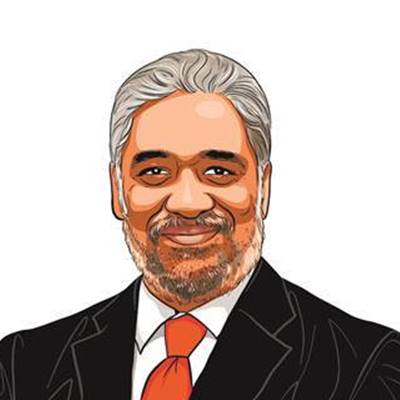



Backpacking envoy
As the first Chinese-American to represent the United States government at the Beijing court,it was inevitable that Gary Locke would draw much local attention and interest when he arrived in Beijing over the weekend. A picture of Locke,carrying a backpack as he bought a coffee at Seattles airport en route to Beijing,snapped and posted on the Net by a Chinese traveller,quickly earned the new envoy the nickname backpacker from the Xinhua news agency.

Locke,who is a third generation Chinese-American,served as the secretary of commerce in the Obama administration before he was appointed envoy to China. Earlier,Locke was elected governor of Washington in the western US in 1996 and 2004.
As realists,Chinese analysts know that Locke is bound to serve American interests at a time when the relations between the two countries have entered a difficult state. But they cant deny the palpable excitement around Lockes Chinese ethnicity. Finding the middle ground,a commentary in China Daily said Lockes ancestry could help him become a bridge between China and the United States and between the two peoples.
At a press conference in Beijing on Sunday,Locke told reporters that he was both humbled and honoured to stand here before you as a child of Chinese immigrants representing America,the land of my birth,and the American values my family holds dear.
One Chinese blogger wondered if those American values included paying back the money Washington owes Beijing. With nearly $1,200 billion worth of Chinese money invested in US treasury bonds,Beijing has recently stepped up criticism of Washingtons financial management. At his Sunday press conference,Locke told journalists that the US was committed to getting our fiscal house in order,and pointed to the fact that more people were buying US bonds these days. So its a clear indication that investment in the United States is safe,secure,and that the economy,while having its challenges,is still strong, Locke insisted.
US-Vietnam bonds
As Chinas first aircraft carrier completed its initial sea trials on Sunday,the USS George Washington showed up off Vietnams coast. The nuclear powered Nimitz-class US aircraft carrier,based in Japan,was said to be on a routine goodwill visit in Asian waters.
This is the second time in two years that the George Washington has been enthusiastically welcomed by Vietnam. Seen from Beijing,there was nothing routine about the carriers visit. Naval contacts between Washington and Hanoi,which handed the United States a big military defeat in the 1970s,have begun to grow as Vietnam finds itself increasingly at odds with its fellow Communist neighbour.
Vietnam and others among Chinas neighbours in Southeast Asia oppose Beijings expansive maritime territorial claims in the South China Sea and resent the muscular tactics of the PLA navy.
China in turn has declared South China Sea as one of its core interests,suggesting there is little room for compromise on its claims in a littoral that connects the Pacific and Indian Oceans.
The first to leave?
While China watches US military ties with its neighbours like a hawk,Beijing is not unduly concerned with Indias own expanding security engagement with ASEAN countries,especially Vietnam. Chinese media reports have claimed that Vietnam has offered the Indian navy berthing rights at Na Thrang port on its southern coast.
Questioned by media earlier this month on Vietnams naval outreach to India,a scholar from the Chinese Academy of Social Sciences,Ye Hailin,said,Vietnam hopes to establish military ties with many other countries so that it can counter China in the South China Sea with more confidence.
While India might like to play a role in South China Sea,Ye said,Delhi does not have the wherewithal for it. To India,the Indian Ocean and the waters from the Arabian Sea to Hormuz Strait are more important,Ye argued. India is neither willing to nor has the ability to extend to the South China Sea and build a military presence there, Ye insisted.
The Chinese analyst was confident that Hanoi,despite its best efforts to mobilise international support,will not be able to balance Beijing. If Vietnam chooses to resolve the South China Sea disputes by force,Ye continued,its friends would not be able to protect it. India,according to Ye,likely formed its alliance on the understanding that China and Vietnam will not likely enter into large-scale armed conflict.
But if Vietnam were to go too far and engage China militarily,India would likely be the first to leave, Ye concluded.
The writer is a senior fellow at the Centre for Policy Research,Delhi
 Share
Share


