Journalism of Courage
 5 min read



The recent Ghaziabad provident fund scam, involving several sitting and retired judges in Uttar Pradesh, has shocked even hardened critics of the judiciary. 26 judges — some serving in the Allahabad High Court and one in the Supreme Court — have allegedly been the recipients of Rs 23 crore worth of cash and valuables . This was swindled from the provident fund of district court employees in Ghaziabad.
This is a scandal of unprecedented magnitude and has landed the judiciary in a quandary. For better or for worse, the judiciary in India has traditionally carried a badge of utmost integrity and the situation of several judges being subjected to a police probe has never risen before.
Understandably, the Ghaziabad police sought permission from the Chief Justice of India and Allahabad Court to initiate a probe against the judges accused in this scam. While the Allahabad High Court dismissed the petition summarily, at the Supreme Court, Chief Justice K. Balakrishnan handled the request with remarkable astuteness and ordered a novel method of investigation that would protect the prestige and the reputation of the judiciary as far as possible.
Heading a Supreme Court bench, Balakrishnan directed the Ghaziabad police to submit a questionnaire that would be forwarded to the accused judges for their reply. Only if their replies are not found satisfactory by the police will the court consider permission for direct interrogation. Even this is an interim arrangement and the Supreme Court has sought further advice from the Solicitor
General of India on the possible methods of probes against the accused.
Regardless of the investigative methods invoked, this case will have lasting repercussions on the prestige of the judiciary as a democratic institution. In dealing with this case, the chief justice has an opportunity to look at corruption in judiciary in a larger perspective. Given that checks and balances exist to prevent or punish official impropriety in other institutions, there are no grounds to single out the judiciary as an exception. The legislature and judiciary must come together to find an effective cure to this growing epidemic.
Politics as usual
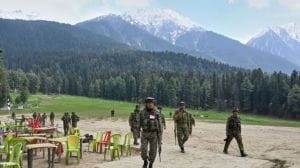
When the former governor of Jammu & Kashmir pushed the state government to transfer some of its forest land to the Amarnath shrine board, the government complied in good faith. This land had traditionally been used as the site of a transit camp by the Amarnath pilgrims and the transfer was intended to allow the Amarnath shrine board to build better facilities for the pilgrims. However, in his haste to get the land transferred, the governor, who was also the acting chairman of the shrine board, had overlooked the possible repercussions among the residents of the valley. When protests erupted over the transfer, the government respected local sentiments and revoked the order, and also committed to providing better accommodation to the Amarnath pilgrims as was the intention behind the land transfer.
The matter should have ended peacefully there — after all, it could not possibly matter to the Amarnath pilgrims if the facilities offered to them were provided by the government or the shrine board. However, instead of praising the government for fulfilling the long-standing demand of the pilgrims, the BJP saw a political opportunity in this non-issue and criticised the government for revoking an order which was not executed in the first place — no allotment of the land had been officially made and no money was transferred by the shrine board to the government.
Worse, keeping an eye on the forthcoming elections in several states, the BJP played the only card it knows and unleashed a second wave of protests against the revocation, throughout the country. The protests turned violent and scores of people have lost their lives over such a non-issue. But the BJP leadership has been unwilling to put an end to the protests, in smug anticipation of political gains.
Stoking communal fires with no regard for repercussions comes naturally to the BJP and the party has time and again used this ploy to bolster its political relevance. The Amarnath land issue seems like a fitting sequel to the Ayodhya issue, which the party milked for well over a decade. This time however, the repercussions of the BJP’s actions threaten to disrupt the peace process in Jammu & Kashmir. As a country, we must not let a misguided political party jeopardise the peace and stability of a state that has shown signs of normalcy after years of turmoil.
The writer is a Congress MP in Rajya Sabha