Journalism of Courage
 5 min read



Remarkably, almost all reports on Thailand8217;s coup have stressed that though 18th during the last seven decades, it is the first in the 15 years since the country opted for democracy. Some have even expressed surprise over it because of the prevailing view of the Thai society that, democracy having taken roots, a military coup had become 8220;impossible8221;. Never to say never thus seems to be the dismal event8217;s first lesson. Indeed, contrary to the general view, several seasoned observers of the Thai scene were convinced that disturbing developments were pushing Thailand towards a takeover by the army.
The overthrow of Thaksin Shinawatraby the Army Commander-in-Chief, General Sonthi Boonyaratkalin, would be better understood if viewed in historical and social perspective. The only South-East Asian country never taken over by a European colonial power, Thailand was an absolute monarchy for nearly four centuries until 1932 when a bloodless coup 8211; akin to the latest one 8211; limited the monarchy8217;s powers. Yet the king, though a constitutional head, remains highly revered and extremely influential. His endorsement of the general8217;s action has sealed Thaksin8217;s fate.
For nearly two-thirds of the last century the dominant role in governing Thailand was that of the armed forces. There was a succession of military dictators. Way back in 1954, I had the opportunity to interview the most prominent of them, Field Marshal Pibul Songgram who, like his successors, was eventually thrown out by his juniors in the military. So it went on until the early nineties when 8211; because of massive resentment among the Thai people, especially the middle class, and a nudge from the US 8211; the country at last embarked on the democratic path. In the autumn of 1997 the Americans were able to exert even greater influence on the formulation of the constitution now abolished because a steep downturn in the economy had forced Bangkok to seek an emergency loan of 15 billion from the IMF.
It was in the first general election under the 1997 constitution in 2001 that Thaksin won an impressive victory. In fact, his Thai Ruk Thai party is the only party ever to have secured a huge majority entirely on its own. Thaksin8217;s enviable triumph was due almost entirely to the overwhelming support in the rural areas whereas the Bangkok elite 8211; which exercises, far political clout and influence out of all proportion to its numbers 8211; had no use for him. The ensuing conflict was aggravated by the PM8217;s personal attributes and distinctive style.
A former policeman, belonging to the countryside, became an extremely wealthy 8220;telecom tycoon8221; by dint of his ability and drive before he joined politics and rose to power. He then tried to run the government by his business methods. At first this proved popular because he did increase the efficiency of the administration. But soon allegations of sleaze, corruption, nepotism and favourtism took over. The worst of the scandals attaching to him was the 8220;Singapore Connection8221;, a short hand for the sale of 49 per cent of the Thaksin family-controlled telecom giant to a state-linked investment firm of Singapore for just under 2 billion.
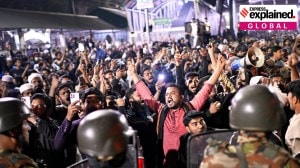
Opposition to him grew fast, despite the massive parliamentary majority that he regained in the 2005 election but once again by winning over the villages but alienating Bangkok. By now all Opposition parties had united against him and street protests against Thaksin, demanding that must quit, were becoming bigger by the day. His response was to withdraw temporarily, come back and win a meaningless 8220;snap election8221; that all Opposition parties boycotted and the constitution court later annulled. An important fact in this connection is that former generals hold high positions in all parties in Thailand. One of Thaksin8217;s sponsors was a former military leader who later turned his foe.
By the time the ousted PM left for the UN, something had to give, and it has.
Experts believe Thaksin8217;s failure to deal adequately with the 8220;bleeding ulcer of jihadi terrorism8221; in the three Muslim-majority districts in southern Thailand on the border with Malaysia has also contributed to his fall. Others disagree. Be that as it may. Yet interestingly a Muslim general is the coup leader in a country with an overwhelming majority of Buddhists.
Most knowledgeable sources believe that the Thai military would have no option but to keep its promise of holding fresh elections within a year after an interim constitution has been drafted. After all, the promise has been made not only to the Thai people who have surely developed a taste for democracy, however flawed, but also to the virtually venerated monarch.
The writer is a well-known political commentator.

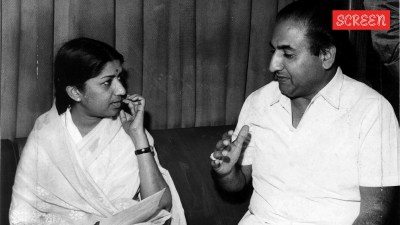
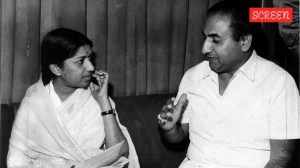
1963 cast a dark shadow on the otherwise successful partnership between Mohammed Rafi and Lata Mangeshkar. Rafi was known to be a simple, naive man who loved his job and preferred to stay away from the business of the movies. It was perhaps his disinterest in this business aspect of the movies, that caused a clash between the duo.