
Opinion Listen,Mister
In case you didnt know it already,scriptwriter,lyricist and poet Javed Akhtar can do many things with words: entertain,enthral,entrap.
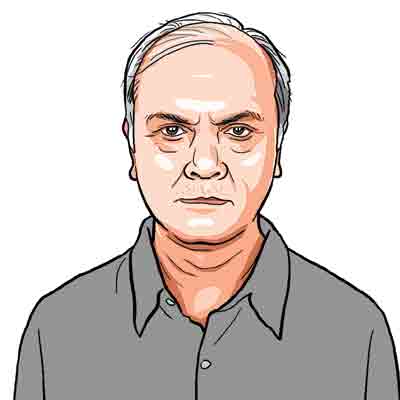



In case you didnt know it already,scriptwriter,lyricist and poet Javed Akhtar can do many things with words: entertain,enthral,entrap. If Muslims were to fear Allah even 10 per cent of the fear they have of fellow Muslims,it would make them better Muslims and more sensible human beings too, I have heard him say in public gatherings of Muslims in Mumbai,Delhi,Lucknow,Kanpur,Allahabad,Hyderabad,Aligarh Muslim University. The spontaneous response to this apparently provocative statement everywhere is assenting nods,sheepish smiles,loud guffaws.
What Javed Akhtar keeps saying in public,a top drawer maulana from the Jamiat-ul-ulema-e-Hind told me in private last year. The biggest hurdles before us, he said,are the Urdu press (read Muslim media) and Muslim leaders. In the name of Islam anything goes. And he who dares utter the dissenting word had better beware!

But if Muslims are so terrified of fellow Muslims,what so frightens the Law Commission of India as to prefer public embarrassment to plainspeak? The commissions 277th report,recently made public,observes that the traditional understanding of Muslim law on bigamy is gravely faulty and conflicts with true Islamic law in letter and spirit. Well said. But look where it goes from there. It proposes a new clause in Hindu family law to abort sham conversions purely for bigamys sake but,mindful of something called religious sensibilities,stays totally mum about what must necessarily be done with the countrys Muslim Personal Law.
Dr Tahir Mahmood,a jurist specialising in Islamic Law,Hindu Law,Religion and Law and Law Relating to Minorities,is one of the commissions members. There can be no doubt that he is party to if not the prime inspiration behind its observations on bigamy in Islam. Spare a thought for the man: it has been more than apparent for some years now that he is torn between his conscience and his community. His knowledge of Islam tells him that sections of the Muslim Personal Law are anything but Islamic. His knowledge of the Muslim world including the Islamic states also tells him that country after Muslim country has introduced wide-ranging reforms,often with the concurrence of the mullahs,in recent decades.
For example,the minimum age for marriage for a girl is 16 years in Pakistan,Egypt,Indonesia and Malaysia; 17 years in Lebanon,Syria and Tunisia; and 18 in Algeria,Morocco and Jordan. But the All India Muslim Personal Law Board in its wisdom demanded some years ago that Muslim girls in India be exempted from the provisions of the law restraining child marriage.
Polygamy is banned in Tunisia,Turkey and Lebanon (for some sects) while it is severely restricted in others. Pakistan permits second marriage under certain conditions but only after following specified procedures that include convincing the Union Council that the husband has the prior consent of his current wife. In Malaysia,a man may marry again only with consent from a Shariah Court. In Indonesia,women who are public servants are prohibited from becoming a second wife. In addition to following regular permission procedures,a male government servant must obtain the permission of his superiors before marrying a second wife. Formal court procedures are obligatory for second marriages in Bangladesh,Singapore and Philippines. In the early 90s,a division bench of the Dhaka high court comprising of two Muslim judges ruled that,read in the modern context,the Quranic injunction on marriage can only have one meaning: monogamy. In a changed political climate however,the judgment was set aside by the Supreme Court of Bangladesh. The privileged Indian Muslim male,however,is under no constraint whatsoever. To top it all,a fatwa issued in Hyderabad two years ago held that it is perfectly Islamic for a Muslim male to marry four women in one go!
Algeria,Indonesia and Tunisia do not recognise talaq (a husbands unilateral right to end a marriage). Divorce is possible only through the courts. In Morocco,talaq is subject to strict judicial control. In Jordan,Lebanon,Malaysia and Syria you have to apply for permission to divorce. Besides,in most of these countries,a reconciliation attempt is mandatory prior to divorce. In Iran,two witnesses are essential for a talaq. Only in India does the Muslim male enjoy the unquestioned right of instant (triple) talaq. Whether sober or dead drunk,in a fit of anger or on a mere whim,he can do so when he likes,how he likes: orally face-to-face,letter,telegram,telephone,fax,e-mail or SMS.
In Tunisia,Morocco and Turkey,both parents have equal rights in child custody and guardianship on divorce. In India,however,the father enjoys the natural right over children. In terms of gender justice,Morocco,a hereditary monarchy,is perhaps the best place for a Muslim woman today. With the new family code,introduced by King Mohammed VI in October 2003 and unanimously adopted by the parliament in February 2004,Moroccan men and women are now equal partners in marriage. The husband is no longer head of the family; both husband and wife now have joint responsibility for the family.
In short,paradoxical as it sounds,in secular India Muslim women have far less rights than their counterparts in numerous Muslim countries. Being a learned man and a believing Muslim,Dr Mahmood cannot but be painfully aware of this rampant male-centrism in Islams name. What can he do? In the midst of so many Muslims either blissfully ignorant of the faith they adore or sworn to the Hypocrisy Oath,he thinks it prudent to measure his words.
Indias Mr Muslim proudly proclaims there is no place for the clergy in Islam. Yet,he is happy to outsource all knowledge of Islam to the very clergy whose existence he questions. As a result he knows little about Islam except that it is the only valid passport to paradise. Armed with this certainty,he is content being a hostage of the maulvi sahib and his male chauvinist Islam. This gender unjust Islam,Mr Muslim,is something to be ashamed,not proud,of.
The writer is co-editor,Communalism Combat,and general secretary,Muslims for Secular Democracy express@expressindia.com
 Share
Share


