
Opinion On Ignoring the Economics Nobel
India's transition to a market economy in the late '80s and early '90s was commented upon in the writings of gurus like Wade,Taylor and the literature on strategic policy models like in Stopford's Carnegie Mellon paper.
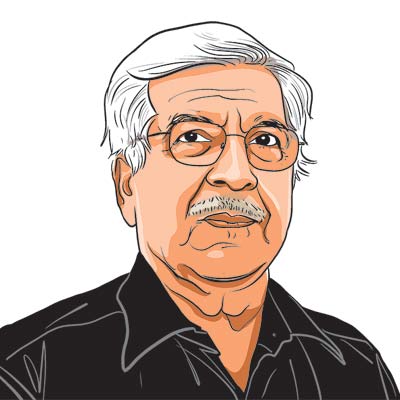



Why does India find it impossible to relate with avant-garde economic doctrines and only revels in handed down pulp? The near miss to Oliver Williamson’s Nobel is an illustration. It is interesting that when Joseph Stiglitz in his last book talked of counterfactuals that succeeded,and the theories that go with them,he discussed Poland and China,while in the early ’90s the references were also to India.
India’s transition to a market economy in the late ’80s and early ’90s was commented upon in the writings of gurus like Wade,Taylor and the literature on strategic policy models like in Stopford’s Carnegie Mellon paper. In the second half of the ’90s and the early part of this decade,Indian economists are well represented in global journals,but there was no perspective on India’s experience from an analytical point of view. This is definitely unfortunate from a knowledge point of view,since knowledge is a source of growth and has practical consequences also.

The world seems again to be at another interesting turning point. Just like at the beginning of the decade of the ’90s before Rio,there seems to be an air of questioning. The East Asian meltdown,the 2008 perfect storm,the new millennium and with other developments,there is an atmosphere of expectation from ideas. In 2009,Stiglitz and George Akerlof now talk of ‘Let a Hundred Flowers Bloom’.
They argue,”Just as the crisis has reinvigorated thinking about the need for regulation,so it has given new impetus to the exploration of alternative strands of thought that would provide better insights into how our complex economic system functions.” I once asked my then boss the late Sukhomoy Chakravarti why his monetary economics was so conservative,while his economics was radical. His eyebrows furrowed when he was under pressure. He told me that those who didn’t do their sums right were never to really help the poor or design growth. Economics at one level is about power,but at another is about understanding. For example,I may disagree with Shankar Acharya on his values,but admire his insights. Edmund Phelps,also ignored in India,was right there at the point Chakravarti was focusing on in the early ’80s and richly deserved his Nobel. His work on institutions which must work if non inflationary growth is to be achieved was classic.
Why is it that Oliver Williamson’s Nobel is not discussed in analytical terms in India? The classic work way back in the mid-70s on markets and hierarchical systems and asset specificity should have immediate resonance in India and no one talks of it. When a graduate student at the University of Pennsylvania,I was sweating out Leon Walras’s classic on general equilibrium,which is just a set of equations. One of my teachers was passing by and looked at me with a twinkle in his eye and told me that after I had worked them all out I should answer a set of simple questions on real life,which he jotted down for me with a pencil. I still keep that paper.
In the world of perfectly working markets of consumers,workers and capitalists,everything depends on everything else and can be switched around. Williamson showed it was not so simple. Hierarchical organisations were a reality and could be socially beneficial and not so. Also assets,capital,could be specific to a sector or geography. This was something we understood in India for the algebra of Mahalanobis systems had triangularised causal chains where critical decisions had to be made in a hierarchical manner. Capital was also non-malleable,in other words in a poor country would not shift easily.
Also we had the entire tradition of Rajiv Gandhi’s agro-climatic literature. We may or may not agree with these models but their reasoning was known to us. In a recent professional meeting I asked that with this tradition why did we not understand and discuss Williamson. I was told with a tinge of regret by Sucha Singh Gill,an experienced teacher,that in India Williamson is not read. These are not our heroes and so we live in a Third World discourse of knowledge domination handed down by the philistines. Sad.
 Share
Share


