Journalism of Courage
 5 min read



Uddu and Subbu were friends. Both were commissioned together, they cleared their rigorous probation together and joined the elite 1 Para (Special Forces), the oldest battalion in the Indian Army. Both are dead today.
Uddu (Captain Uday Singh) and Subbu (Captain Subramaniam) came from vastly different backgrounds. While Subbu died three years ago, Uddu was hopping from one active operation to another when his luck ran out on November 29 this year. Uddu’s death would probably have passed by un-noticed but for the death of his namesake a few days later, fighting another war, for another army.
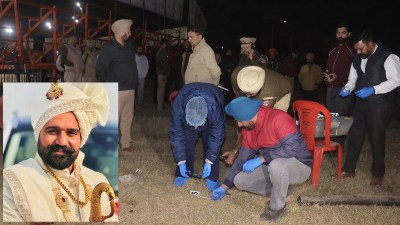
Sgt Uday Singh, at 21 years of age, had made the US army his career choice and on an unfortunate day fell to a bullet from an unknown assailant in Iraq. While US Embassy officials in India hastened to inform his parents, few at Army Headquarters even knew of Uddu’s final journey. No one in the media was officially informed, as had been the practice during the Kargil War. Uddu quietly came home on a wintry Sunday evening and his mortal remains were consigned to the flames a day later at Brar Square, in keeping with the time-honoured traditions of the Indian Army.
So who was Uddu? And why did he die?
In 1995 when Uddu stepped out of Delhi’s Deshbandhu College he was selected as a management trainee by the Taj Group but left six months later to join the Indian Military Academy’s 100th course. When he passed out with Subbu in June 1997, he was ready to join the best of the best. Together they served, through operations in the Northeast to days in the Muskoh Valley chasing intruders during the Kargil War in 1999. And they were together with 1 Para’s Charlie team in 2000 when Subbu died.
Imagine a young man, barely 29 years old, carrying the responsibility of nearly 100 lives on his shoulders. Quickly learning his ropes as a young lieutenant, Uddu was already promoted as a field-major, leading his troops as a team commander when he was killed in the forests surrounding Rajouri.
Uddu was serving with the Special Group, a force under the Cabinet Secretariat raised to perform as a Special Forces unit. Yet, it has no cadre of its own, is dependent on officers and at times other ranks who are deputed to the force to serve for a few years before they go back to their parent units.
Could such a unit, tasked to conduct such high-risk operations, perform under such circumstances? Special Forces units the world over have developed a certain ethos where they are given the freedom to choose the men who will serve with them. It helps build trust and camaraderie, and in high-risk operations it makes the difference between life and death.
But in an era when the army is expanding its Special Forces and seeking more and more volunteers for its elite units, certain established standards and traditions are overlooked. An army already facing an officer shortage at the cutting edge — its young officers in the ranks of lieutenants, captains and majors — is hard pressed to find more volunteers who will meet the rigorous standards required for its elite Special Forces units.
Instead, they depend on their Uddus and Subbus to come on deputation armed with their Special Forces ethos and exacting standards. And yet, as former 1 Para officers gathered at Brar Square last Monday to pay their last respects to their departed comrade, there was concern. Would it have made a difference, they asked of their juniors presently deputed to the Special Group, if Uddu had been with one of their own? While Uddu took these risks, could those he was serving with on deputation deliver in the same way that his troops from his own unit would have? Troops he had earlier lived with, served with and fought battles with. Troops he would have gone back to soon after his deputation was over.
These are questions only Uddu or those who served with him can answer. But answers must be sought. In his death one must seek a debate on the recent move to expand Special Forces when their modernisation is still on hold. There must be a debate on seeking a permanent cadre for the Special Forces, as is the practice in most countries today, be it the British Special Air Services or the innumerable Special Forces units of the US army. It is through this debate that one can aid future Uddus to continue to do what he did — serve with honour and pride in the Indian Army.